This work emerges from a lifelong witnessing of how bodies are taught to disappear.
I grew up within Latin American society, observing how women learn early to measure themselves through judgment. I witnessed my mother belittle my sister for being overweight, not out of cruelty, but inheritance. I watched my grandmother submit her body to countless plastic surgeries in pursuit of youth, as if time itself were a moral failure. These moments were not isolated. They were ordinary, almost invisible, folded into daily life. In this cultural landscape, aging, especially for women, was never something to inhabit with grace. It was something to manage, correct, and endure quietly.
Every Body exists as a reckoning with that inheritance.
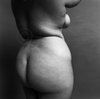
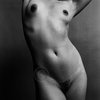
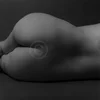
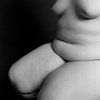
Aging is not a rupture, but a continuum. It is a slow, physical record of survival. Skin carries memory. Flesh holds history. Yet culturally, we are taught to read these marks as decline. This work resists that reading. By removing faces, names, and narrative hierarchy, the body is no longer a site of comparison or shame, but of presence. What remains is texture, weight, softness, strength, and the undeniable evidence of having lived.
These images do not attempt to beautify or redeem the body. They do not offer transformation or escape. Instead, they insist on attention. They ask for a slower gaze, one that allows complexity without resolution. Aging here is not loss, but accumulation. Every line, fold, and curve is an archive.
This series is not about bodies as they should be, but bodies as they are. They are shaped by Latin American cultural inheritance, by family, by time, and by survival. It is an attempt to interrupt silence, to sit with discomfort, and to reclaim dignity from narratives that have long denied it. Every Body invites us to look without judgment, and in doing so, to recognize ourselves not as ideals, but as human.
Please Note: This is now an award winning series. Lens Culture has picked it as one of the winning series in their "Emerging Talent" competition. Click here for an in-depth description of the series. As part of the prize, one of the images was shown at the Klompching Gallery New York in March 2018.
BuzzFeed featured the series in one of their articles titled (click title) ” 7 Photo Stories That Will Help You See The World A Little Differently”.
Here is what they said:
“Two things in R.A. Tinoko’s process drew me to this collection: that faces are out of frame, and that it’s an ongoing project. Because of the choice not to identify the subject, this series is one of those times when the author does not need words to tell a story. You don’t need context to understand it; these bodies are anyone and everyone. The second point enhances this idea of inclusiveness. By not setting an end date, Tinoko drives the point home that everybody (and every body) is unique and deserves to be weaved into the wide, diverse fabric of physical beauty.”
Some of the images from the series were shown in February, 2019 at the Venice Audio Visual Show at The Palazzo Michiel.
Also one of the prints from this series has been picked by Brett Rogers, director of The Photographer's Gallery in London, as the gallery winner in the Photofusion members show.